Buying a larger lot or piece of land in Harvest can feel like a smart way to get more space, more privacy, and more flexibility. But with land, the big question is not just how many acres you are getting. It is whether the parcel will actually work for what you want to do. If you are thinking about building, adding a shop, or simply buying room to spread out, this guide will help you focus on the details that matter most before you fall in love with a property. Let’s dive in.
Why land in Harvest needs a closer look
Harvest is a census-designated place in Madison County with 5,893 residents and about 12.33 square miles of land area, based on the 2020 Census. In practical terms, that means you may find a mix of lot types, rural-feeling parcels, and properties that do not function like a typical subdivision homesite.
When you buy a larger lot or raw land in Harvest, you are often making a site-feasibility decision as much as a real estate decision. Access, utilities, flood status, septic suitability, and permit requirements can all affect what you can build and how much it may cost to get there.
Because Harvest is in unincorporated Madison County, many of the key questions run through county offices. Madison County handles items such as zoning inquiry, house numbering, right-of-way, flood protection, subdivision review, and parcel mapping.
Start with access and road frontage
One of the first things to check is how the parcel connects to a road. A lot can look fine on a map and still create problems if the access is narrow, unclear, or not properly recorded.
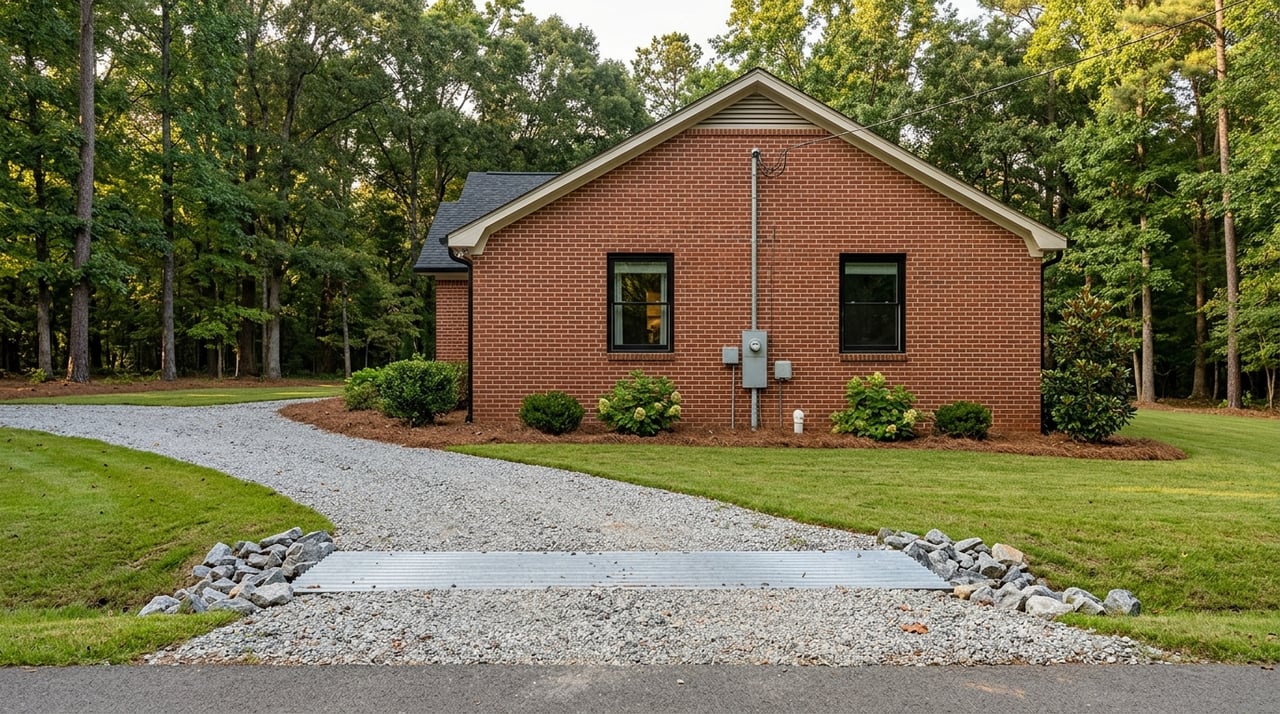
Madison County’s subdivision rules say each lot in a proposed subdivision should have physical frontage on a public or private street. The county’s house-numbering office also requires at least 30 feet of access to an existing county road through ownership or a recorded easement before it will assign a new address.
That makes landlocked parcels, flag lots, and properties that only seem to touch the road worth extra review. If access is unusual, you may need a surveyor, title professional, and county staff to confirm exactly what rights come with the property.
Why access matters so early
Without acceptable access, you can run into issues long before construction begins. You may not be able to get an address assignment, and that can delay the permit path for a future home.
This is one reason a lower purchase price does not always mean a better deal. A parcel with simple, documented access may be far more usable than one with more acreage but more uncertainty.
Acreage is not the same as buildable area
A larger lot can make a listing sound simple, but the usable portion of the land may be much smaller than it first appears. Madison County requires residential permit submittals to show minimum building lines, easements, and property lines.
That means the true buildable envelope may shrink once setbacks, drainage features, and utility easements are mapped out. A parcel that looks wide open in photos can still have limited room for the house placement you have in mind.
What can reduce usable land
Before you move ahead, it helps to look for:
- Drainage areas
- Utility easements
- Required setbacks
- Irregular lot shape
- Access corridors that consume frontage or width
If you are planning more than a house, such as a detached garage, shop, pool, or solar array, those layout details become even more important.
Check flood and drainage before you price the project
Flood and drainage questions should move to the top of your list early. Madison County participates in the National Flood Insurance Program and requires a floodplain development permit before work in a designated floodplain.
The county also provides flood-protection information, an interactive flood map, and manages stormwater and drainage in unincorporated areas. For a buyer, that means you should not treat flood status as a last-minute item.
Why this affects both plans and budget
If part of the parcel sits in a designated floodplain, that may affect where you build, what approvals you need, and how the site must be prepared. Even when a property is large, the portion that is practical for construction may be more limited than the total acreage suggests.
Drainage matters too. Water movement across a site can influence grading, driveway placement, and the long-term use of the property.
Do not assume sewer or utility service
A common mistake with larger lots is assuming that public utilities are available just because the parcel has a Harvest mailing address. In the Harvest-Monrovia area, water, sewer, and fire protection are served by Harvest-Monrovia Water, Sewer and Fire Protection Authority, but sewer service was added only to certain locations.
In other words, being in Harvest does not automatically mean a lot has sewer. HMWSA also posts a fee schedule showing that new service can involve meter, impact, and connection charges.
For a new home build in Madison County, you will need an address assignment plus either sewer authorization to tap or a septic permit from the Madison County Health Department before the county will issue a residential permit. The county also requires a site plan and building plans as part of the application.
Electrical service may vary by parcel
Electrical service in Alabama is territory-based. That means you should verify the provider for the exact parcel instead of assuming it based on nearby homes or the mailing address.
This can be a small detail that saves time later, especially if you are budgeting for a new build or planning utility extensions.
Septic and well suitability can shape the whole deal
If the lot will rely on septic or a well, do not let acreage alone reassure you. Madison County regulations state that lot size and width may be dictated by the soil survey reviewed by the Madison County Health Department, and septic systems must be designed and built under state and county health rules.
That means a parcel can be large and still not be as straightforward as you expect. Soil conditions, layout, and approvals all matter.
What this means for buyers
If public sewer is not available, your next step is usually to confirm septic feasibility early. You may also need to explore well-related planning depending on how the site is served.
This is one of the clearest examples of why land buying is about more than price per acre. The wrong assumptions here can lead to delays, redesigns, or extra expense.
Understand permit needs for future improvements
Many buyers picture more than just a house on a larger lot. You may be thinking about a workshop, pool, fence, solar installation, or other accessory structures.
Madison County’s inspection department requires permits before construction or alteration begins, and some structures need engineered drawings. So even if the land itself looks ready, your longer-term plans may still require review and approvals.
This is worth checking at the beginning, especially if a key reason for buying the property is the freedom to add improvements later.
A smart process for buying land in Harvest
A careful process can help you avoid expensive surprises. In Madison County, a practical sequence is to confirm the parcel in county GIS and tax records, order a boundary survey, verify access, check flood status, and then line up utility and septic or well professionals if the lot is not already fully served.
If access or utility corridors are unusual, Madison County Public Works also handles right-of-way and easement matters, including private utility permits and easement vacation requests. That is why larger-lot purchases often need several people reviewing the same property from different angles.
A simple due diligence checklist
Before you get too far down the road, make sure you have checked:
- Parcel location in county GIS and tax records
- Boundary survey
- Road frontage or recorded easement access
- Flood status and drainage concerns
- Water and sewer availability
- Septic permit path if sewer is not available
- Electrical provider for the exact parcel
- Easements, setbacks, and likely building envelope
- Permit needs for the home and future improvements
If you plan to trench for utilities, install a driveway, fence, or shop, Alabama 811 says to submit a locate ticket and wait for the required positive response before digging.
Why local guidance matters with Harvest land
Larger lots and land purchases usually have more moving parts than a standard resale home. You are not just comparing finishes, square footage, and recent sales. You are trying to understand how the property functions in the real world.
That is where patient, detailed guidance can make a real difference. When you have a local advisor who understands Harvest and Madison County logistics, it becomes easier to spot the tradeoffs, ask better questions, and move forward with confidence instead of guesswork.
If you are considering a larger lot or land in Harvest, Alice Battle can help you evaluate the practical side of the property so you can make a clear, informed decision.
FAQs
Can you build on a larger lot in Harvest just because it has acreage?
- Not necessarily. Access, flood status, utilities, septic suitability, easements, setbacks, and permit rules all affect what can actually be built.
What should you verify about road access for land in Harvest?
- You should confirm road frontage or recorded easement access. Madison County requires at least 30 feet of access to an existing county road through ownership or a recorded easement before assigning a new address.
Does a Harvest parcel automatically have sewer service?
- No. Harvest-Monrovia Water, Sewer and Fire Protection Authority serves the area, but sewer service is only available in certain locations, so each parcel should be checked individually.
What happens if a larger lot in Harvest does not have sewer?
- You may need septic permitting through the Madison County Health Department, and the lot’s soil and layout can affect whether that path works.
Do accessory projects on land in Harvest need permits?
- Often, yes. Madison County requires permits before construction or alteration begins, and some structures or improvements may need additional review or engineered drawings.